
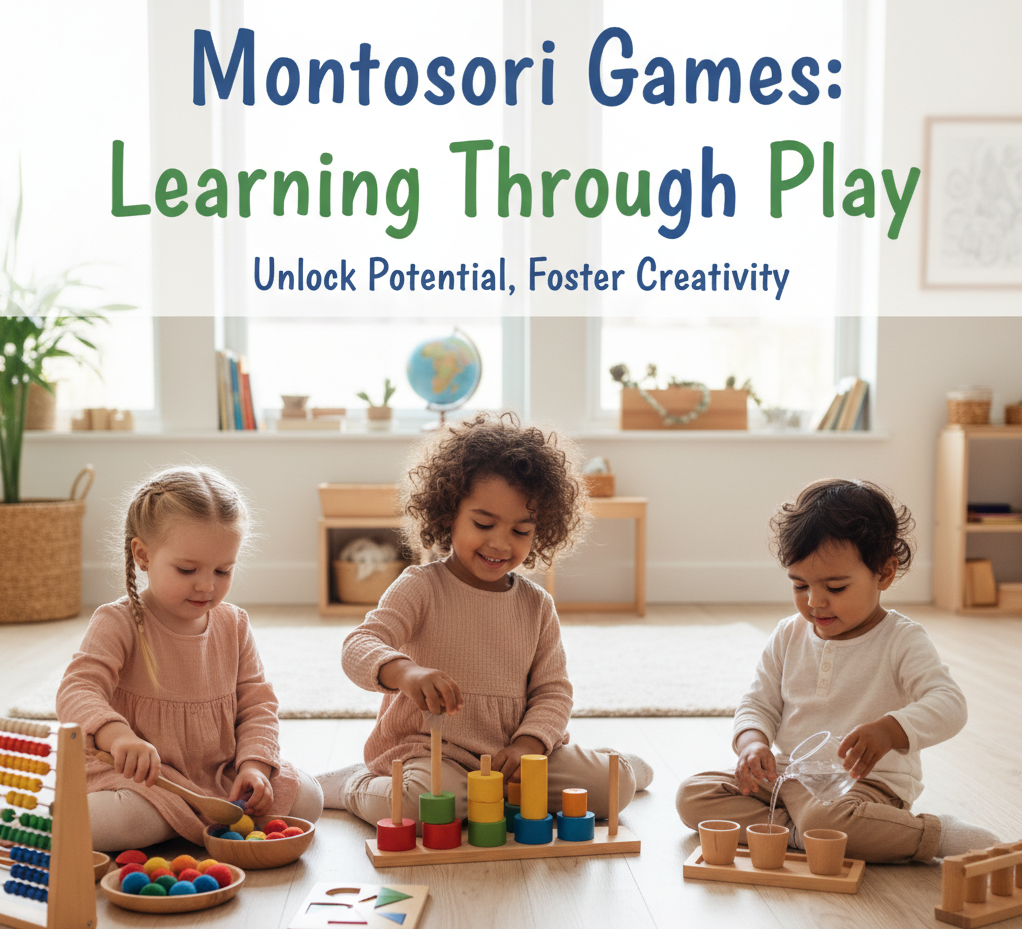
Montessori Games: Learning Through Play for Happy and Engaged Children
Play is a child’s natural language and the best way for them to learn about the world. Montessori games blend play and education seamlessly, encouraging exploration, concentration, and skill development in a joyful way. When you incorporate Montessori games into daily routines, your child benefits from hands-on learning that fosters independence and creativity.
Why Are Montessori Games Important?
Montessori games are carefully designed to support developmental goals through purposeful play. They help children:
- Develop fine and gross motor skills
- Enhance sensory perception
- Build problem-solving and reasoning abilities
- Encourage social skills and cooperation
- Promote concentration and patience
The goal is not just to entertain but to engage children meaningfully, making learning joyful and effective.
Popular Montessori Games to Try at Home
Here are some Montessori-inspired games that you can easily set up:
Color Matching Games Use color tablets or colored cards to encourage children to match and organize by colors. This teaches visual discrimination and categorization.
Shape Sorting Puzzles Simple wooden puzzles with geometric shapes develop spatial awareness and hand-eye coordination.
Counting Beads or Objects Use beads or natural small objects to practice counting, patterns, and simple math concepts.
Sensory Bottles and Touch Boards Create sensory experiences with materials of varied textures and sounds to engage your child’s senses.
Practical Life Games Turn everyday tasks such as buttoning, pouring, or sweeping into fun challenges that build independence.
Tips for Creating a Montessori Game Environment
- Keep materials accessible and organized on low shelves
- Choose natural, simple toys that encourage creativity
- Observe your child to understand their interests and developmental needs
- Rotate games to maintain curiosity and focus
- Offer quiet spaces for concentrated play without distractions
Related Resources on Montessori Spiele
- Montessori Practical Life Activities
- DIY Montessori Materials for Learning
- Montessori Sensory Play Ideas
FAQ – Montessori Games
Q: At what age can Montessori games be introduced? A: Montessori games can be adapted for all ages, starting from infancy with sensory play up through preschool and primary age with more complex activities.
Q: Are Montessori games only for individual play? A: No, many Montessori games encourage cooperative play and social interaction, promoting teamwork and sharing.
Q: Do I need special Montessori materials to play these games? A: Not necessarily. Many activities use simple household items or can be created DIY. Montessori emphasizes natural and purposeful materials.
Q: How can I tell if my child is ready for a new game or activity? A: Observe their interest, attention span, and skills. Children usually show enthusiasm when ready for a more challenging activity.
Q: How do Montessori games fit into daily routines? A: They can be easily incorporated as short, focused learning moments integrated with playtime, outdoor activities, or quiet time.
Montessori games offer a beautiful bridge between fun and learning, supporting your child’s growth in a natural, enjoyable way. Start exploring Montessori play ideas today and watch your child flourish!
For more inspiration, visit Montessori Spiele.